
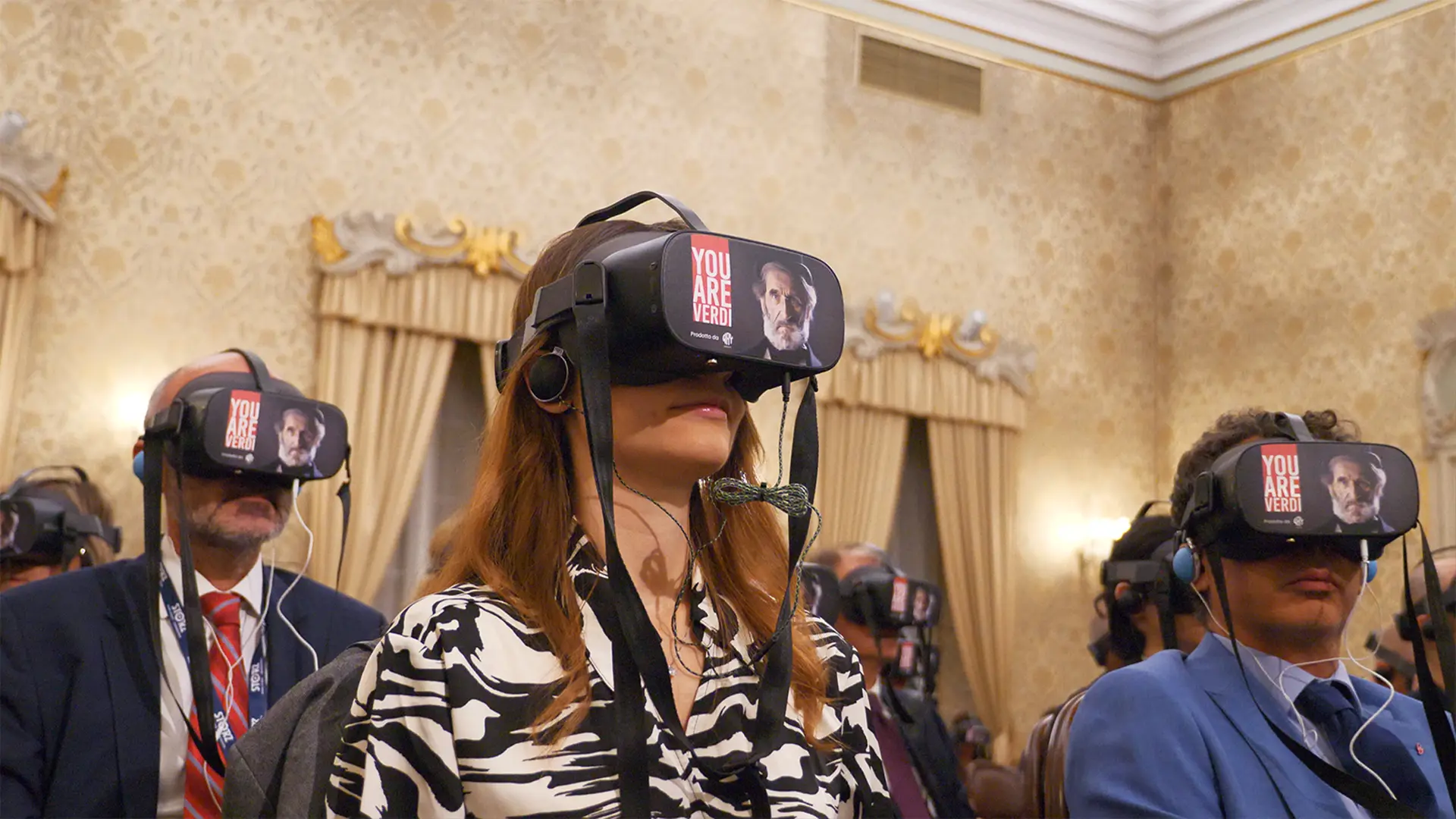
In a crowded media landscape, attention is the scarcest commodity a brand can buy. Audiences scroll past advertising in seconds and trust traditional messaging less than ever. Experiential marketing offers an answer by inviting people to participate rather than simply watch — and virtual reality takes that principle to its fullest expression. This playbook sets out what experiential marketing with VR involves, why it works and how brands can use it to create activations people remember and share.
Experiential marketing is built on a simple insight: people remember what they do far more vividly than what they are told. Rather than broadcasting a message, brands create moments audiences actively take part in, forging an emotional connection that conventional advertising rarely achieves. The approach has matured from one-off stunts into a strategic discipline, central to how many brands build loyalty and cultural relevance. What has changed most recently is the role of technology. Where experiential marketing once relied on physical installations alone, immersive tools now allow brands to create entirely bespoke worlds. This expands the creative palette dramatically: a brand is no longer limited by the physics of a venue or the cost of building a set, but can transport audiences anywhere its story requires. This shift matters because audiences have grown more discerning. They can tell the difference between a genuine experience and a thinly disguised advertisement, and they reward the former with attention, affection and advocacy. Experiential marketing succeeds precisely when it gives something to the audience — a moment of delight, surprise or insight — rather than simply extracting attention from them. Virtual reality, used with care, is one of the most generous gifts a brand can offer in this respect.
Virtual reality amplifies experiential marketing for one fundamental reason: presence. A well-crafted VR experience does not merely show a brand world — it places the participant inside it, engaging multiple senses and commanding full attention in a way no screen can. For the duration of the experience, the audience is wholly within the brand’s narrative, free from the distractions that fragment attention elsewhere. This depth of engagement translates into stronger recall and a more positive emotional association with the brand. There is also a powerful social dimension: immersive experiences are inherently novel and therefore highly shareable, generating word-of-mouth and user content that extend the campaign’s reach far beyond those who attended in person. The activation becomes both an experience and a content engine. Equally valuable is the quality of the data such experiences can generate. Because participation is active and structured, brands can learn a great deal about how audiences respond — which elements draw the most attention, where people linger and what prompts them to act. Handled responsibly and transparently, these insights help refine not only future activations but the wider marketing strategy, turning a single experience into a source of lasting understanding about the audience.
Virtual reality lends itself to a range of experiential formats. Immersive pop-ups in high-footfall locations turn a temporary space into a destination, drawing curious audiences and creating a sense of occasion. Virtual showrooms allow brands to present products in contexts impossible to recreate physically — placing a vehicle on a mountain road or a product at the heart of its origin story. At trade fairs and events, immersive activations help a brand stand out in a sea of conventional stands, attracting visitors and giving sales teams a memorable hook for conversation. The common thread across these formats is differentiation: in each case, VR offers something audiences have not seen before, which is precisely what experiential marketing sets out to deliver. For brands exhibiting at fairs, the principles extend naturally into conference and trade-show environments. Increasingly, the most ambitious campaigns blend the physical and the virtual rather than choosing between them. A tactile, beautifully designed physical space can set the scene and build anticipation, while the immersive element delivers the emotional peak. This hybrid approach plays to the strengths of both worlds: the warmth and social energy of a real place, combined with the boundless imagination of a virtual one. The choice of format, ultimately, should follow the story the brand wants to tell.
The most successful immersive campaigns share a few principles. First, the experience must serve the brand story rather than showcase technology for its own sake; the VR is a means, not the message. Second, the experience should be accessible and comfortable, with thoughtful staging and support so that first-time users feel at ease. A confusing or physically uncomfortable activation undermines the very impression it aims to create. Third, the best campaigns plan for amplification from the outset — designing shareable moments and capturing content that lives on across channels. Finally, they define success in advance: footfall, dwell time, leads captured or social reach, depending on the objective. Clear goals make it possible to demonstrate value and refine the approach over time, rather than treating the activation as a one-off spectacle. A final principle is consistency. An immersive activation should feel unmistakably part of the brand — its tone, its values and its visual world — rather than a generic technology demonstration that could belong to anyone. When the experience is a true extension of the brand’s identity, every minute a participant spends inside it reinforces the relationship. When it is not, even the most impressive technology leaves no lasting trace, and the investment is largely wasted.
Turning these principles into a successful activation requires both creative vision and immersive production expertise. WAY Experience partners with brands and agencies to design bespoke VR experiences, from concept and storytelling through to production and on-site delivery. You can explore our approach to custom immersive projects and learn more about WAY and the experiences we have created. For brands in France and Switzerland, Italy’s proximity makes WAY a practical partner for on-site activations across Europe, combining creative depth with logistical convenience. The brands that win audiences today are not those that shout loudest, but those that offer the most memorable experiences — and virtual reality is one of the most powerful tools available for creating them.
Events, groups and schools
segreteria@wayexperience.it
Custom Projects
aziende@wayexperience.it
Customer care
info@wayexperience.it
Via Pordenone 8
20132 Milan
Italy
WAY Srl | CF e P.IVA 10728950964
Privacy Policy | Cookie Policy | Cookie preferences | Public Grants